Handcrafted soap for sensitive skin: what to check first

Sensitive-skin soap shopping is choosing a handcrafted bar for a daily cleansing ritual without overlooking ingredients your skin dislikes. When choosing handcrafted soap for sensitive skin, small-batch craft adds pleasure—but the formula, not the handmade label, decides whether a bar belongs beside your shower.
- Choose handcrafted soap for sensitive skin by checking the full ingredient list, fragrance and your previous reactions.
- Bathe in Luxury offers handcrafted soap; craft alone does not establish suitability for sensitive skin.
- Fragrance-free and unscented are not interchangeable; read the label rather than relying on the product name.
- Introduce one cleanser at a time, skip scrubbing and stop using a bar that causes irritation.
Why soap choice matters for sensitive skin
A beautiful bar should make your routine feel special, not turn every shower into guesswork. Sensitive skin makes that distinction personal: a scent you enjoy and a cleanser you tolerate are separate questions.
The handcrafted, cold-processed soap offered by Bathe in Luxury brings craft into everyday bathing. That tells you how the brand approaches its products; it does not tell you which individual formula suits your skin.
Bathe in Luxury handcrafted soap is best for craft-focused shoppers who check individual formulas before choosing. For sensitive-skin shoppers, that ingredient check comes before scent, presentation or a collection name.
Use this 2026 buying guide to separate the pleasure of choosing soap from the evidence needed to choose carefully. You do not need an elaborate ritual. You need a readable label, a gentle washing routine and permission to pass on a bar that does not suit you.
How to choose handcrafted soap for sensitive skin
Read the full ingredient list first
Start with the complete ingredient list, not the front-of-pack promise. Compare it with products you already tolerate and ingredients you have previously been told to avoid.
Handcrafted, cold-processed and natural describe different things. None means fragrance-free, allergy-free or automatically gentle. A short ingredient list is easier to review, but length alone does not establish suitability either.
If you have a diagnosed contact allergy, use the avoidance guidance provided by your dermatologist. Do not replace that guidance with a general list of supposedly good or bad soap ingredients.
Make your first check practical:
- Find the complete ingredient list before buying.
- Compare it with your current cleanser.
- Flag ingredients linked to your own previous reactions.
- Separate manufacturing claims from skin-suitability claims.
- Ask the seller for clarification when an ingredient is unclear.
Check fragrance before falling for the scent
Scent can turn a rushed shower into a small sanctuary. For sensitive skin, it also deserves a deliberate check: fragrance is a recognized cause of contact allergy, and essential oils are not an automatic workaround.
Fragrance-free is a more useful starting point than unscented when fragrance is your concern. Unscented products can contain ingredients used to mask an underlying smell. Read the full formula rather than treating either word as a personal guarantee.
You do not need to decide that every scented product is unsuitable for everyone. You need to decide whether fragrance fits your own history and priorities. If fragrance has caused trouble before, skip the scent-led experiment.
Before choosing a scented bar:
- Look for fragrance or parfum in the ingredient list.
- Check for essential oils rather than assuming they are gentler.
- Treat fragrance-free as a starting filter, not a guarantee.
- Avoid using a scent name as evidence of mildness.
- Keep known fragrance triggers out of your shortlist.
Match the bar to your actual routine
Begin with what already works: your current cleanser, your usual shower and the parts of your routine that leave skin comfortable. Then decide what you want a handcrafted bar to change. Perhaps it is the pleasure of using a solid bar rather than adding several new bath products.
When browsing Bathe in Luxury handcrafted soap, use the individual product page as your next check. The Oatmeal Milk and Honey Soap Bar, for example, is a product to investigate—not proof that the formula is fragrance-free, vegan or suitable for your skin.
A familiar-sounding ingredient in a name does not establish the complete formula. The same rule applies to botanical, dessert-inspired and fresh-scented names in your 2026 shortlist.
Narrow the choice before buying:
- Choose 1 bar to assess rather than changing your whole routine.
- Check the intended use on the product label.
- Keep a familiar cleanser as your comparison point.
- Judge the complete formula, not a highlighted ingredient.
- Leave matching scrubs and bath products out of the initial trial.
Introduce the cleanser without stacking changes
A new soap is easier to assess when everything else stays familiar. Keep your usual moisturizer and avoid introducing a scrub, bath soak and body wash alongside the bar.
Trying a rinse-off product on a small area according to its directions is different from medical patch testing. A home trial cannot diagnose an allergy or guarantee that a product will remain comfortable with repeated use. If your clinician has given you testing instructions, follow those instead.
Do not push through burning or itching because a bar feels luxurious. Comfort is the requirement, not a reward you earn by finishing the bar.
Keep the introduction simple:
- Make 1 product change at a time.
- Follow the label’s directions for use and rinsing.
- Avoid trying a new cleanser on already irritated skin.
- Stop using the product if irritation develops.
- Seek medical advice for persistent or significant reactions.
Keep the shower gentle
Even a carefully chosen cleanser is only part of the routine. Hot water, prolonged washing and vigorous scrubbing can make bathing harder on sensitive skin.
The American Academy of Dermatology’s public dry-skin guidance recommends warm rather than hot water and limiting baths or showers to 5–10 minutes. That is a useful routine check, not a promise that a particular soap will suit you.
For your 2026 shower reset, keep the indulgence in the atmosphere: a fresh towel, an unhurried pause and a comfortable room. There is no need to chase a squeaky-clean finish with repeated washing.
Adjust the routine around the bar:
- Use warm water rather than hot water.
- Keep showers within the 5–10-minute guidance.
- Use your hands instead of an abrasive scrubber.
- Rinse the cleanser away thoroughly.
- Pat skin dry rather than rubbing hard.
- Apply your usual tolerated moisturizer after bathing.
Store the bar and record your experience
Let the bar drain between uses instead of leaving it sitting in pooled water. A draining holder makes the daily ritual tidier; it does not change the ingredients or make an unsuitable soap gentler.
Keep a simple note of what you used and how your skin felt afterward. This is more useful than relying on a vague memory of a lovely scent. Record the exact product name so you can distinguish one formula from another.
For a 2026 soap notebook, separate the shopping decision into three checks: Formula, Routine, Comfort. The formula is what you buy, the routine is how you use it, and comfort is what determines whether you continue.
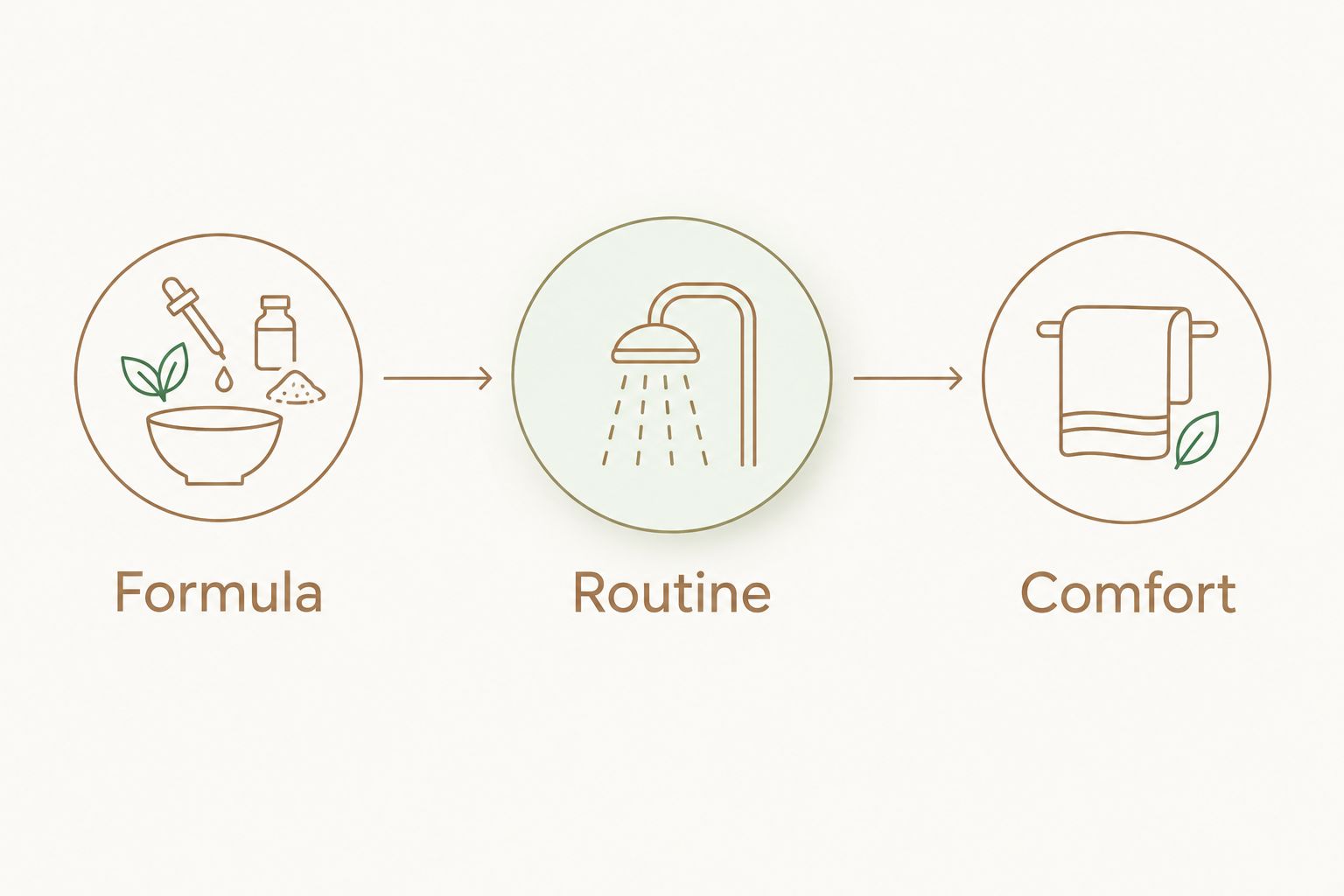
A useful note can stay brief. You are looking for a repeatable, comfortable routine—not assigning a performance score to every shower.
- Store the bar where water drains away.
- Keep the ingredient list for future reference.
- Note the exact product name and when you introduced it.
- Record discomfort without trying to diagnose its cause.
- Stop an unsuccessful trial rather than adding more products to compensate.
Compare your cleansing options
The best option depends on what you need to control. Craft, fragrance and cleansing formula are different considerations, so compare them separately rather than ranking every solid bar above every liquid cleanser.
For sensitive skin, the useful question is not whether a product looks more natural. It is whether you can assess its ingredients and use it comfortably.
| Option | Best for | Main advantage | Key limitation |
|---|---|---|---|
| Fragrance-free handcrafted soap | Shoppers who value craft and want to avoid added fragrance | Combines a handmade format with a clear fragrance preference | Fragrance-free does not guarantee that the rest of the formula suits you |
| Scented handcrafted soap | Shoppers who tolerate the specific formula and enjoy scent | Makes fragrance part of the bathing ritual | Adds a fragrance consideration for anyone with known sensitivity |
| Fragrance-free soap-free cleanser | Shoppers prioritizing a non-soap cleansing option | Offers an alternative to traditional soap | Ingredients still require checking; the format alone is not a guarantee |
| Your current tolerated cleanser | Shoppers whose routine already feels comfortable | Provides a familiar baseline | Does not add the handcrafted-bar experience you are considering |
Keep the cleanser that works while you investigate the bar you want. There is no benefit in replacing a comfortable routine simply because another product has a more appealing craft story.
Bathe in Luxury offers the handcrafted experience. The limit is equally clear: a brand description cannot establish individual skin compatibility, and a product name cannot replace an ingredient review.
Common mistakes sensitive-skin shoppers make
Treating handmade as a skin-suitability claim
Handmade tells you about production, not your personal response. The same applies to cold-processed. Enjoy the craft, but make the purchasing decision from the formula and your history.
Better move: keep two separate questions on your checklist: “Do I like how this is made?” and “Do the ingredients fit my needs?”
Choosing by a comforting ingredient name
Oatmeal, milk, honey and botanical names can sound reassuring. A highlighted ingredient does not reveal every other ingredient in the bar, and a product name is not a treatment claim.
Better move: read the complete label before treating any named ingredient as a reason to buy. Do not infer vegan status from the brand’s broader positioning either.
Building a whole scented ritual at once
A coordinated soap, soak and scrub sounds inviting. Introducing them together makes it harder to identify which change caused discomfort if your skin reacts.
Better move: keep the towel-and-quiet-time part of the ritual. Add new formulas separately rather than treating a matching scent collection as a single trial.
Mistaking tightness for a successful clean
A tight, uncomfortable finish is not a luxury benefit you need to accept. Nor should you assume that more lather or firmer scrubbing produces a better result for sensitive skin.
Better move: assess comfort after rinsing and drying. Revisit the cleanser and washing routine rather than trying to scrub your way to a better result.
Buying a collection before assessing a formula
A collection gives you more products to enjoy, but it also introduces more formulas to evaluate. That is a poor starting point when you are trying to understand what your skin tolerates.
Better move: begin with a clearly documented individual choice. Save variety for after you understand which products fit your routine.
FAQ
What is the best handcrafted soap for sensitive skin?
The best handcrafted soap for sensitive skin is an individual formula that avoids your known triggers and feels comfortable in use. Start with the complete ingredient list; handmade and cold-processed labels do not establish suitability.
Is fragrance-free soap better than unscented soap for sensitive skin?
Fragrance-free is the more useful starting point when you are trying to avoid fragrance. Unscented products can contain masking fragrance, so check the full ingredient list rather than relying on the front label.
Does cold-processed soap mean it is gentle enough for sensitive skin?
No. Cold-processed describes how soap is made, not whether it suits sensitive skin. Assess the complete formula, your known triggers and how the cleanser feels during normal use.
Can I choose Bathe in Luxury soap just because it is handcrafted?
No. Choose Bathe in Luxury soap after checking the individual formula, not solely because it is handcrafted. Craft adds to the buying experience but does not establish fragrance status, vegan status or skin compatibility.
What should I check when buying sensitive-skin soap in 2026?
Check the full ingredient list, fragrance information, directions and your own history of reactions. Use the current product information for your 2026 purchase rather than assuming that a familiar product name answers those questions.
Can I use a new soap and sugar scrub together?
Introduce them separately so you can assess each change. Keep the rest of your routine familiar, avoid scrubbing irritated skin and stop using a product that causes discomfort.
What should my sensitive-skin shower routine look like in 2026?
Keep your 2026 routine simple: warm water, gentle washing, thorough rinsing and your usual tolerated moisturizer afterward. The American Academy of Dermatology’s public dry-skin guidance recommends limiting baths or showers to 5–10 minutes.
One last thing
Your most useful shopping tool might already be in your bathroom: the ingredient list of a cleanser you comfortably use. Keep it handy while you browse. It gives you a personal reference point that a scent description cannot provide.
Luxury does not require a longer routine. Sometimes it is one carefully chosen bar, a dry place to keep it and a shower you finish feeling comfortable in.