Handcrafted soap with essential oils or fragrance oils?

Choose handcrafted soap with essential oils if you want a scent derived from aromatic plant materials; choose fragrance-oil soap if you want a wider range of scent styles, including blends that do not come from a single botanical extract. Neither is automatically gentler or better made. For a small-batch bar that turns your daily shower into a little ritual, judge the full formula and the scent you enjoy—not the word natural alone.
- Handcrafted soap with essential oils suits shoppers who specifically want plant-derived scent; it is not automatically gentler.
- Fragrance oils offer broader scent possibilities, but the name alone does not reveal the blend’s ingredients.
- Batheinluxury is best for shoppers seeking handcrafted soap for an everyday bath-and-body ritual.
- Read the ingredient list before treating a scent name as proof of essential oils or vegan ingredients.
Why this matters
You buy a luxury soap bar to enjoy using it. The scent matters, but so do the ingredients, the lather, and whether that bar belongs in your everyday routine rather than sitting untouched beside the sink.
Batheinluxury sells handcrafted, cold-processed soap and bath-and-body products. When choosing a bar in 2026, separate those craft details from its fragrance source: cold-processed tells you about the soapmaking method, not whether the scent comes from essential oils.
A lovely name is an invitation to look closer. It is not an ingredient list.
Handcrafted soap with essential oils or fragrance oils?
Choose the fragrance source that matches your preference, then check the complete formula. Essential oils and fragrance oils describe scent materials; handcrafted describes how a product is made. Those are different questions, and neither answers the other.
| Choice | Best for | Main advantage | Main limitation | What to verify |
|---|---|---|---|---|
| Essential-oil soap | Shoppers who specifically want botanical scent materials | Its scent comes from aromatic plant extracts | Plant-derived fragrance can still cause irritation or an allergic reaction | Which essential oils appear in the ingredients |
| Fragrance-oil soap | Shoppers who want broader or more imaginative scent styles | Fragrance blends can create profiles beyond individual essential oils | A scent name does not disclose the blend’s composition | The ingredient declaration and any additional fragrance information |
| Fragrance-free soap | Shoppers who want to avoid added fragrance | It removes added scent from the buying decision | Fragrance-free does not mean the entire formula suits every person | The full formula, including any ingredients you already avoid |
Do not treat this as a quality ranking. A thoughtfully formulated fragrance-oil bar is not inferior simply because its fragrance is not exclusively botanical. An essential-oil bar does not earn a gentleness claim simply because its scent came from a plant.
For your 2026 soap shortlist, keep three questions separate: How was it made? What gives it its scent? Do its ingredients fit your preferences?
Essential-oil soap: best for botanical scent preferences
Essential oils are aromatic materials obtained from plants, commonly through distillation or, for some citrus oils, expression. In soap, they supply fragrance. Their presence does not by itself establish a skincare benefit.
Choose this route when the source of your scent genuinely matters to you. Perhaps you want a bar fragranced with a named botanical oil rather than a perfume-style interpretation of that botanical. That is a useful preference—not a reason to assume every other bar is poorly made.
What essential oils do well
A clearly named essential oil gives you more specific information than a scent description alone. You can distinguish a bar that lists lavender oil from one described only as lavender-scented, for example.
That distinction helps you shop deliberately. It also helps you avoid buying a bar whose story sounds botanical while its fragrance source remains unclear.
What essential oils do not promise
Essential oils are not an automatic shortcut to mildness. Some fragrance substances, including those found naturally in essential oils, can cause allergic reactions or irritation.
Nor does botanical scent mean the whole bar is organic, vegan, or suitable for your skin. Those are separate claims that need separate evidence.
Best for: shoppers who value a specified botanical fragrance source. Choose essential-oil soap for that reason, not for an unsupported promise that it will treat a skin concern.
Fragrance-oil soap: best for a wider scent palette
Fragrance oils are scent blends that can contain synthetic aromatic materials, naturally derived materials, or both. They allow soapmakers to create profiles that are not available as a single essential oil.
Think of the difference between asking for a named botanical and asking for an impression: fresh linen, a bakery-style scent, or a layered perfume-like blend. The latter describes an experience rather than a particular extracted plant oil.
What fragrance oils do well
Fragrance blends give you room to choose by mood. If you enjoy a warm, sweet, clean, or intricate scent, there is no need to reject it simply because it is not an essential oil.
The practical advantage is choice. Your shower ritual can center on the scent you actually want to use, rather than an ingredient category you feel obliged to prefer.
What fragrance oils do not promise
The words fragrance oil do not tell you exactly what a blend contains. They also do not establish how strong the finished bar smells or how it will feel on your skin.
Best for: shoppers who prioritize a particular scent experience over an exclusively botanical fragrance source. Read the formula with the same care you would give an essential-oil bar.
How to choose your daily soap in 2026
Start with the bar you will reach for on an ordinary morning. A useful buying decision combines scent preference, ingredient information, and a routine you can actually enjoy.
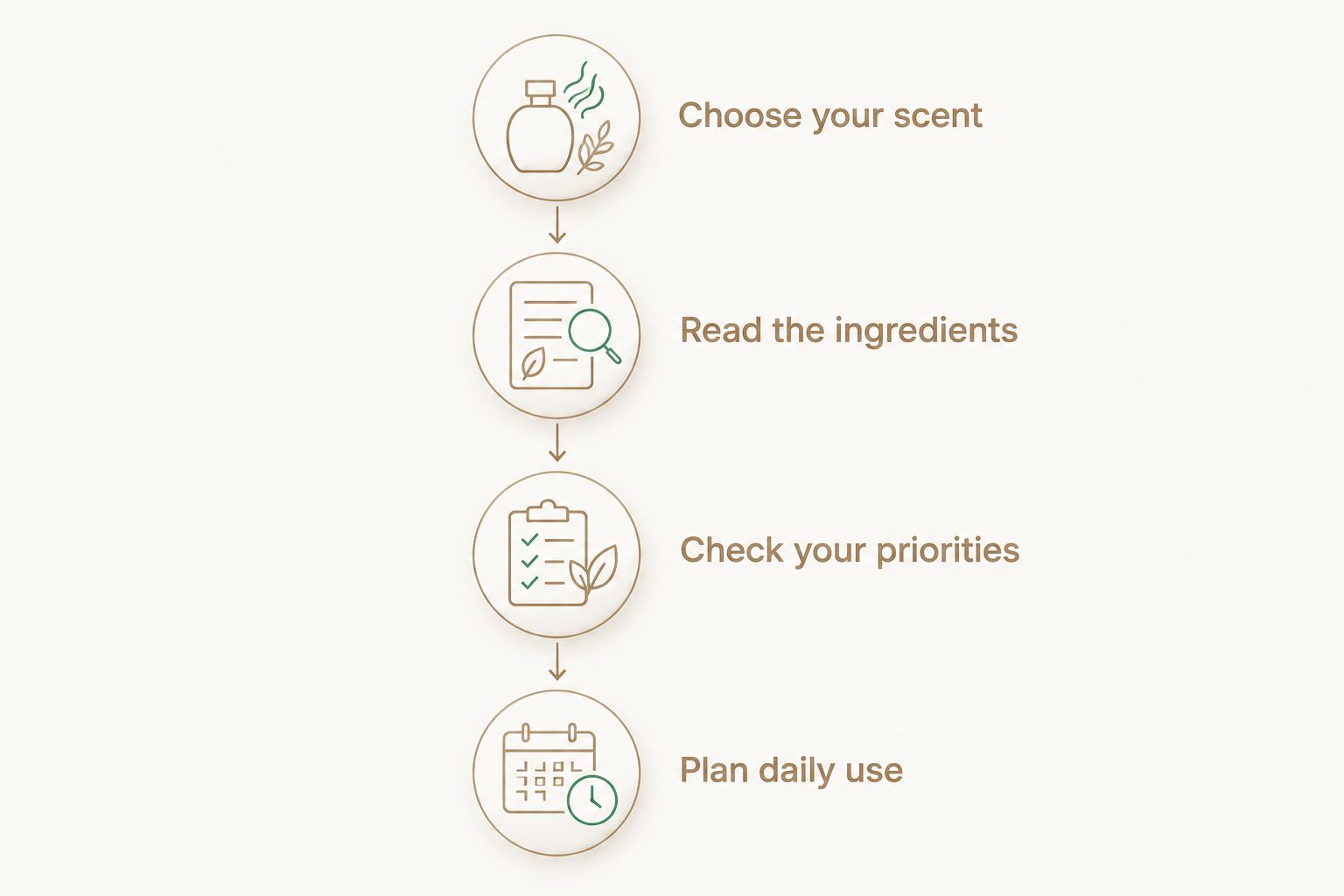
- Choose your scent. Decide whether you want a named botanical fragrance, a more imaginative blend, or no added fragrance. There is no need to make botanical scent your goal if it is not your preference.
- Read the ingredients. Look for the fragrance information rather than relying on the front-of-label name. If you avoid a particular ingredient, check for that ingredient directly.
- Check your priorities. Assess vegan, organic, or other preferences separately. One appealing claim does not establish the rest.
- Plan daily use. Consider whether you want this scent in your regular shower. Follow the product’s use and care directions rather than assuming every handcrafted bar needs identical treatment.
You do not need a complicated bathroom ritual. You need a bar you enjoy, enough information to choose it deliberately, and a place for it in your day.
Keep the purchase focused on your own use. An elaborate scent story matters less than whether you want that scent beside you each morning.
Why the finished scent varies
An essential-oil label does not tell you everything about the finished soap. Neither does a fragrance-oil label. These factors explain why two bars in the same broad category can smell different:
- The aromatic material. Different plant oils and fragrance materials have different scent profiles. The category name is only a starting point.
- The blend. A bar can combine several aromatic materials. One named note does not describe the entire fragrance.
- The soapmaking process. Scent materials behave differently during soapmaking, so the original fragrance material and the finished bar are not interchangeable experiences.
- Storage and age. Exposure to air, heat, and light can affect aromatic materials. Follow the maker’s storage advice.
- Your own preferences. A scent you love in a room fragrance is not necessarily one you want in your daily soap. Choose for the setting where you will use it.
Judge the finished bar, not an imagined version of its ingredients. A fragrance description helps narrow your choices, but it does not replace your personal response to the scent.
What should you check on a handcrafted soap label?
Read past the headline. For a 2026 purchase, the useful distinction is between a descriptive name and an ingredient statement: one introduces the experience; the other helps you understand the formula.
A page named Peppermint Soap Bar, for instance, identifies a scent direction. The name alone does not establish whether that fragrance comes from peppermint essential oil, a fragrance blend, or a combination. Check the current ingredient information before making that distinction.
The same discipline applies to vegan claims. Do not assume a bar is vegan because its scent is botanical, or because another product from the same maker is vegan. Review the ingredients for the individual product.
Batheinluxury handcrafted soap belongs on a shortlist for shoppers interested in cold-processed craft. Evaluate each bar separately for fragrance source and ingredients. The brand’s soapmaking method does not settle those product-level questions.
Is handcrafted soap with essential oils better for sensitive skin?
Handcrafted soap with essential oils is not automatically better for sensitive skin. Botanical fragrance can still irritate skin or trigger an allergic reaction, so essential oil is not a substitute for checking ingredients you know you cannot tolerate.
If fragrance is a known trigger for you, look for fragrance-free options rather than switching between scented categories. If you have an ongoing skin condition or uncertainty about a reaction, ask a qualified healthcare professional for guidance.
Do not keep using a bar that causes a reaction just because its ingredients sound natural. Your comfort matters more than the label’s appeal.
Can fragrance-oil soap still feel like everyday luxury?
Fragrance-oil soap can belong in an indulgent daily ritual. Luxury is not proof of a particular fragrance source, and essential oils do not have exclusive ownership of an enjoyable shower.
Choose a scent you look forward to, with ingredient information that fits your needs. Then let the ritual stay simple: water, lather, rinse, and a brief pause before the rest of your day.
For 2026, a useful buying rule is to spend your attention on what you will actually use. A bar chosen only to satisfy a natural-sounding claim is not a better purchase if you dislike its scent.
FAQ
What is the difference between essential oils and fragrance oils in soap?
Essential oils are aromatic plant extracts, while fragrance oils are scent blends that can contain synthetic materials, naturally derived materials, or both. Neither category alone establishes the quality or gentleness of the finished soap.
Is handcrafted soap with essential oils always natural?
Handcrafted soap with essential oils is not automatically an entirely natural product. Essential oils describe one part of the formula; read the complete ingredient list rather than extending that description to the whole bar.
Are essential oils safer than fragrance oils in soap?
Essential oils are not automatically safer than fragrance oils. Both can contain fragrance substances that cause irritation or allergic reactions, and the finished formula matters.
Does lavender-scented soap always contain lavender essential oil?
Lavender-scented soap does not necessarily contain lavender essential oil. The scent name describes the fragrance direction; check the ingredient information to identify its source.
Can I tell whether a soap is vegan from its scent?
You cannot determine whether a soap is vegan from its scent. Check the individual product’s ingredients and relevant product information rather than assuming botanical fragrance makes the whole formula vegan.
What should I look for when buying handcrafted soap in 2026?
When buying handcrafted soap in 2026, look for a scent you enjoy, clear ingredient information, and a formula that matches your preferences. Treat claims about craft, fragrance source, and vegan ingredients as separate checks.
Who is Batheinluxury handcrafted soap best for?
Batheinluxury handcrafted soap is best for shoppers seeking cold-processed bars for an everyday bath-and-body ritual. Check each product’s ingredients and fragrance information before choosing a specific bar.
One last thing
The most useful word on a soap page is not necessarily natural. It is the ingredient name you needed to check. That small shift takes the pressure out of choosing between essential oils and fragrance oils.
Pick the scent you want to return to. Check the formula. Let your everyday shower be the occasion—not something you save the good soap for.